How to Make a Solid Shampoo Bar at Home: DIY Syndet Recipe
Making a solid shampoo bar at home comes down to one early decision: soap or synthetic detergent. That choice dictates how the bar feels on hair and how it performs in local water conditions. Many South African makers try cold-process soap recipes first, only to find the bars leave hair feeling waxy or tangled. That’s down to high alkalinity and mineral interaction, not a flawed recipe.
This guide sticks to syndet formulation, because a solid shampoo bar that respects the hair fibre’s natural pH will perform reliably across varying water hardness levels. You’ll work with mild, sulphate-free surfactants and conditioning lipids available locally, and end up with a professional-quality bar without touching lye.
Syndet vs Soap: Choosing the Right Solid Shampoo Bar Base
A traditional soap bar is chemically distinct from a syndet bar. Confusing the two is the most common reason homemade shampoo bars fail to perform. Soap forms through saponification, which gives an alkaline product with a pH typically between 9 and 10. Syndet bars sit at pH 4.5 to 6.0, matching the natural acidity of the scalp and avoiding the cuticle swelling that comes with alkaline soap.
Alkaline soap raises the hair cuticle. That causes friction, tangling, and a rough texture that many people mistake for damage needing intensive repair. In hard water areas common across South Africa, soap also reacts with calcium and magnesium ions to form insoluble scum, which deposits directly onto the hair shaft.
Syndet formulations sidestep this because synthetic detergents don’t react with minerals and don’t need an acidic rinse to restore smoothness. That’s what makes syndet the right base for a shampoo bar meant for regular use rather than occasional clarifying.
Essential Syndet Shampoo Bar Ingredients for Formulators
Solid surfactants provide the cleansing action and foam structure that define a functional shampoo bar. The blend you choose decides whether the final product feels harsh or balanced. Sodium Cocoyl Isethionate (SCI) is widely regarded as the gold standard for mild syndet bars: it delivers dense, creamy lather while staying gentle on the scalp and compatible with sensitive skin.
You need a secondary surfactant alongside SCI to improve solubility and reduce the crumbly texture pure SCI can produce in compressed formats. Cocamidopropyl Betaine or Decyl Glucoside often do this job well, though availability varies among South African suppliers.
Fatty alcohols like cetyl alcohol add hardness and slip. They stop the bar dissolving too quickly during use and improve wet combability. Cationic conditioners such as Behentrimonium Methosulfate (BTMS) handle detangling and static control, which matters if you’re building a bar for dry hair that needs to cleanse without stripping natural lipids.
DIY Naturally stocks cosmetic-grade solid surfactants and conditioning agents chosen for South African formulators making waterless hair care, so you can source compatible materials locally rather than importing from suppliers who may not understand regional climate conditions.
Formulating a Sulphate Free Shampoo Bar Recipe
Precision matters in solid formats. Small deviations in surfactant ratios affect bar integrity, lather quality, and dissolution rate more than you’d expect. Always weigh ingredients by mass rather than volume. Powdered surfactants have variable bulk densities, which makes volumetric measurement unreliable for batch consistency.
A balanced sulphate-free shampoo bar recipe for dry or sensitive scalps might run 50% SCI, 15% Cocamidopropyl Betaine, 10% BTMS-50, 8% fatty alcohol, 7% liquid oil or butter, 5% humectant such as glycerin, and 5% additives including fragrance or botanical extracts. Adjust these percentages to suit your surfactant blend and the bar characteristics you want, but don’t drop below 40% total active surfactant matter, or the bar won’t clean properly.
Your formulation decisions here decide whether the final product works as a true shampoo or just a poorly structured soap substitute.
Incorporating Nourishing Lipids: Mango Butter and Castor Oil
Lipids in syndet bars do two jobs: they buffer surfactant harshness to prevent scalp dryness, and they add hardness and longevity through repeated wet-dry cycles. First Cold Pressed Castor Oil, used as a secondary lipid, enhances foam viscosity and brings humectant properties that lighter carrier oils don’t offer, which matters in shampoo bars where lather stability drives user satisfaction.
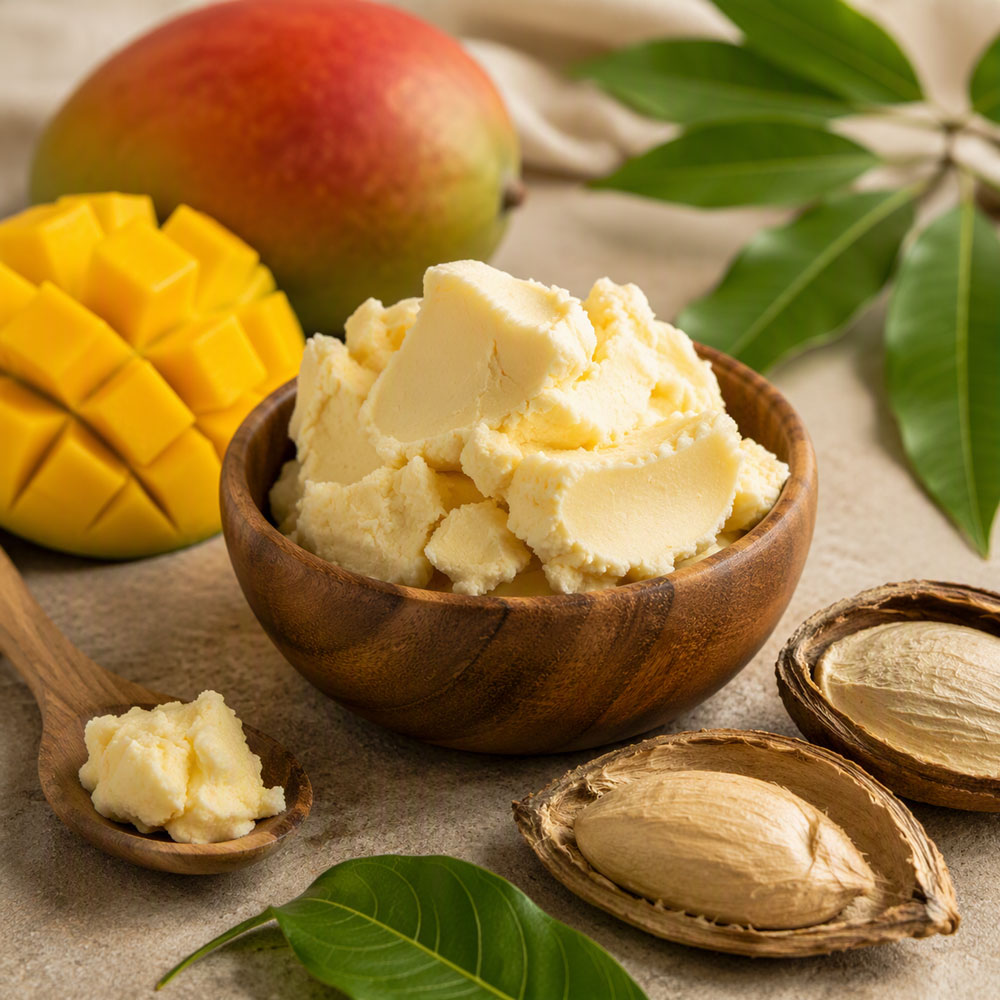
Castor oil’s ricinoleic acid profile supports bubble structure without weighing down fine hair. That sets it apart from heavier oils that can flatten volume or speed up greasiness between washes. Mango Butter offers strong refatting capability with a firmer texture than shea, which helps bar structure while still melting readily on contact with warm water and scalp.
Shea Butter (unrefined) gives richer emollience for very dry or coily hair, but can soften the bar too much if used above 8% in humid climates. First cold pressed Castor Oil, Hexane Free remains the better choice for most syndet formulations, since it balances foam support, shine, and bar hardness more effectively than alternative lipids.
Mixing, Moulding and Setting Your Solid Shampoo Bar
Powdered surfactants don’t bind through a chemical reaction the way soap does. Heat and compression fuse them into a cohesive solid structure that holds together during use. Heat your surfactant and lipid phase gently to around 70–80°C until fully melted and uniform, then mix thoroughly before adding heat-sensitive additives like fragrance or preservatives.
Press the warm mixture firmly into your mould with a spatula or tamper to eliminate air pockets, which cause crumbling or uneven dissolution. Silicone loaf moulds or individual cavity moulds work well for syndet bars. Metal tins work too, if lined to prevent sticking.
Let the bar cool completely at room temperature for at least 24 hours before demoulding, to allow full crystallisation and structural set.
Rushing the cooling phase produces bars that crack, crumble, or stay too soft to handle without deforming, which undoes the formulation work that came before it. Understanding cosmetic rheology principles explains why compression density affects dissolution rate, and why under-pressed bars turn porous and fall apart prematurely in water.
Troubleshooting Common Solid Shampoo Bar Formulation Issues
Excessive softness usually means either insufficient compression during moulding or too high a proportion of liquid oils relative to solid surfactants and fatty alcohols. If your bar stays pliable after full curing, increase fatty alcohol by 2–3% or reduce liquid oil content, and check that you applied enough pressure during packing.
Poor lather typically comes from low total active surfactant matter or surfactant combinations that suppress foam instead of building it. Reformulate with a higher SCI percentage, or add a foam booster like sodium lauryl sulfoacetate if your blend isn’t producing satisfactory bubbles within three rubs against wet hair.
Waxiness or residue almost always points to accidental soap formation rather than true syndet, or contamination with alkaline ingredients during mixing. Check your pH falls within the 4.5–6.0 range with calibrated test strips or a meter, and confirm no sodium hydroxide or potassium hydroxide entered your workspace during production.
Rapid dissolution suggests the bar isn’t dense enough, or it has too many water-soluble humectants drawing in moisture and speeding up breakdown. If your bars disappear within ten uses, bring glycerin below 5% and apply more compression force during moulding for tighter packing.
Stability Testing and Packaging Homemade Shampoo Bars
Anhydrous shampoo bars typically contain less than 2% water activity, which cuts microbial risk substantially compared with liquid shampoos when formulated correctly. Humidity during storage or shipping can still introduce surface moisture, though, and that can trigger mould growth or premature activation of surfactants.
Run basic accelerated stability checks by storing sample bars at elevated temperature and humidity for four weeks, watching for changes in colour, odour, texture, or weight loss. Follow established stability testing protocols to validate shelf life claims before selling or distributing beyond personal use.
Breathable packaging protects the bar from physical damage and dust while letting moisture escape, which prevents condensation building up inside sealed containers. Paper wraps, cotton bags, or ventilated cardboard boxes work better than airtight plastic for keeping anhydrous integrity intact in South African climates, where temperature swings drive condensation cycles.
Learn more about packaging waterless cosmetics to pick materials suited to your distribution channels and storage conditions. Proper packaging extends usable life and protects the formulation work you put into building a functional syndet bar.
Browse our range of solid emulsifiers and surfactants to source the ingredients covered in this guide and start formulating your own shampoo bars.