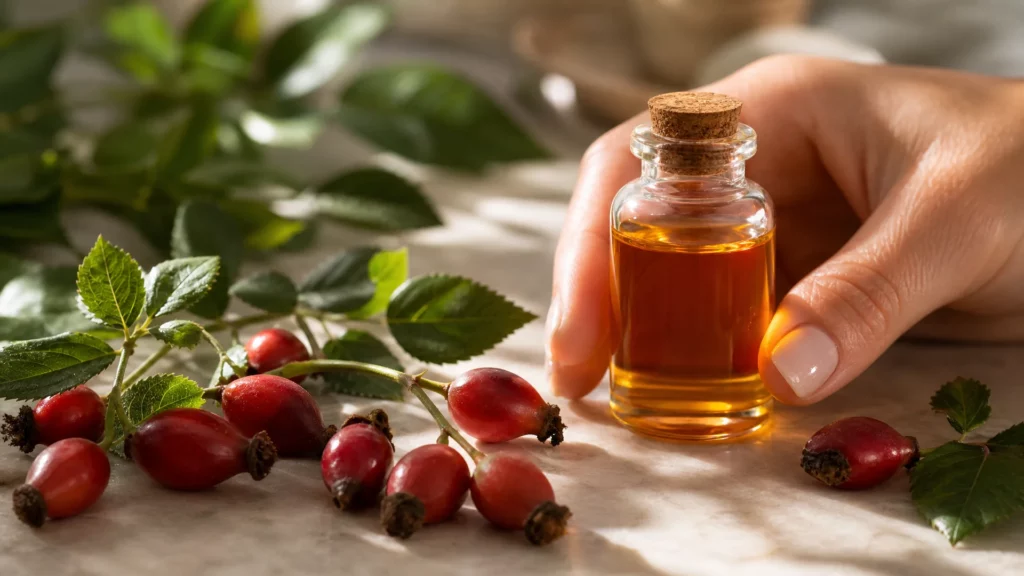
Rose Hip Oil for Anti-Aging: DIY Serums and Skin Benefits
If you’ve spent any time researching natural skincare, you’ve almost certainly come across rose hip oil for anti-aging. It’s one of the most talked-about carrier oils in DIY formulation, and for good reason. Unlike many trending ingredients, the science behind rose hip oil is solid, its results are visible, and it’s genuinely accessible to home formulators. This guide covers exactly why it works, how to blend it correctly, three recipes to get you started, and how to keep your serum stable for longer than a few weeks.
If you’re new to making your own skincare, the beginner’s guide to skincare formulation is a good place to start before diving into percentages and blending ratios.
Rose Hip Oil for Anti-Aging Skin – Why it Works
The key fatty acids and what they actually do
Rose hip oil is pressed from the seeds of Rosa canina and related species. What makes it stand out among carrier oils is its fatty acid composition. It’s exceptionally rich in linoleic acid, an omega-6 fatty acid that typically makes up over 40% of its profile, and alpha-linolenic acid (ALA), an omega-3. Both are polyunsaturated fatty acids (PUFAs) that the skin cannot produce on its own.
Why does that matter? Linoleic acid is a critical component of the skin’s barrier. When your barrier is intact, skin holds moisture, stays calm, and recovers faster from environmental stress. Mature skin often shows declining linoleic acid levels, which is part of why it thins and loses resilience over time. Applying a linoleic-rich oil topically helps replenish what’s missing.
Rose hip seed oil is also one of the few plant oils naturally containing trans-retinoic acid, a form of retinoid, which supports cell turnover. This is rare in a plant-derived carrier oil and is one reason rose hip has earned such a strong reputation in anti-aging formulation.
Rose hip oil for wrinkles and scars: what the skin science says
Rose hip oil for wrinkles works through a combination of mechanisms: the retinoic acid encourages skin renewal, while the linoleic and linolenic acids support the skin barrier and reduce transepidermal water loss. Used consistently, the result is skin that looks plumper and more even over time.
For scars, the fatty acid profile does the heavy lifting. Linoleic acid plays a role in regulating skin pigmentation and supports the skin’s ability to remodel collagen. Rose hip oil for scars, particularly post-inflammatory hyperpigmentation and surgical scars, has been the subject of clinical interest, with several small studies showing meaningful improvement in scar appearance over eight to twelve weeks of consistent use.
It’s not a miracle fix, but it is one of the most capable carrier oils available for these concerns.
How to Use Rose Hip Oil in a DIY Serum: Percentages That Work
Recommended usage rates for face serums
Rose hip oil blending is more nuanced than simply pouring it into a bottle. Because of its high PUFA content, it’s prone to oxidation, so using it at very high concentrations in a leave-on product creates stability challenges.
A practical range for a DIY face serum is 30–80% rose hip oil, depending on your formulation goals:
- 30–50%, Ideal if you want a stable, longer-lasting serum. Blending with more stable oils keeps oxidation in check while still delivering meaningful rose hip benefits.
- 50–80%, Higher potency, suited to formulators who make small batches and use them quickly (within 4–6 weeks). Better for direct, targeted use.
Many experienced formulators keep rose hip below 50% in leave-on products specifically because of oxidation risk. The higher the PUFA load, the shorter the usable life, so your blending choices directly affect your serum’s shelf stability.
If you prefer a silky skin-feel without synthetic ingredients, explore natural silicone alternatives for a silky serum skin-feel to round out your formula.
Pairing rose hip oil with complementary carrier oils
The right blending partner improves both skin feel and stability. Here are the most useful pairings:
Jojoba oil, Technically a liquid wax, not an oil, which means it’s highly resistant to oxidation. It has an almost indefinite shelf life and adds a dry, non-greasy skin feel. Blending jojoba at 20–40% with rose hip gives you stability without sacrificing skin benefits. For more detail on how jojoba oil performs as a stable blending partner, it’s well worth a read before you start formulating.
Squalane, Lightweight, very stable, and compatible with all skin types. A 10–20% addition smooths the texture of a rose hip serum considerably.
Marula oil, Higher in oleic acid, which is more stable than linoleic. It adds richness and is an excellent choice for very dry or mature skin.
Sea buckthorn oil (diluted), Intensely brightening due to its beta-carotene content. Use at no more than 1–5% because of its deep orange pigment, which can stain.
Two DIY Rose Hip Serum Recipes to Try at Home
These recipes are anhydrous (oil-only) formulas, so they don’t require a preservative. If you ever add water, hydrosol, or aloe, when to add a preservative to your DIY serum becomes essential reading.
Brightening anti-aging face serum
Purpose: A balanced daily serum targeting fine lines, uneven tone, and dullness.
| Ingredient | Percentage |
|---|---|
| Rose hip oil (cold-pressed) | 45% |
| Jojoba oil | 30% |
| Squalane | 20% |
| Carrot seed carrier oil | 4% |
| Vitamin E oil (tocopherol) | 1% |
Method: Weigh each ingredient directly into a dark glass dropper bottle. Cap, invert gently to mix. Label with the date. Use within 8–10 weeks.
The carrot seed carrier oil as a brightening add-in brings additional carotenoids to support tone and radiance, a popular choice in South African indie serum blends right now.
Scar-softening dry oil blend
Purpose: A fast-absorbing, targeted blend for post-inflammatory scars or surgical marks. Lighter texture, higher rose hip potency.
| Ingredient | Percentage |
|---|---|
| Rose hip oil (cold-pressed) | 65% |
| Jojoba oil | 20% |
| Sea buckthorn oil | 3% |
| Baobab oil | 11% |
| Vitamin E oil (tocopherol) | 1% |
Method: Weigh and combine in a dark glass dropper bottle. Use within 4–6 weeks due to higher PUFA content. Apply a few drops to clean skin, morning and/or evening.
Baobab oil is high in oleic acid and absorbs beautifully without heaviness, it’s a good stabilising addition to a high-rose-hip formula.
Rose Hip Oil Storage: Preventing Oxidation and Rancidity
This is the part most wellness blogs skip entirely, and it’s where many DIY serums fail. Rose hip oil’s strength (its high PUFA content) is also its vulnerability. PUFAs oxidise when exposed to heat, light, and air. An oxidised oil smells unpleasant and can actually irritate skin rather than soothe it.
Here’s how to keep your rose hip serum stable:
Use dark glass bottles. Amber or cobalt glass blocks the UV light that accelerates oxidation. Clear glass or plastic are both poor choices for a rose hip formula.
Store in a cool, dark place. A bathroom cabinet near a warm shower is one of the worst spots. A bedroom drawer or even the fridge works better, cool, stable temperatures slow the oxidation process significantly.
Add Vitamin E as an antioxidant stabiliser. Adding Vitamin E oil to slow oxidation is standard formulation practice. At 0.5–1% of your total formula weight, tocopherol acts as a chain-breaking antioxidant, meaningfully extending the shelf life of polyunsaturated carrier oils like rose hip. It won’t prevent rancidity indefinitely, but it buys you real time.
Make small batches. A 30 ml batch used within 4–8 weeks is far safer than a 100 ml bottle that sits on your shelf for months. For high-PUFA serums, small and fresh is always better.
Check before you use it. If your serum smells crayon-like, nutty, or sharp, that’s oxidation. Discard it and make a fresh batch.
Typical shelf life for a well-formulated rose hip serum, stored correctly, is 2–3 months. A higher rose hip concentration means a shorter safe window.
Sourcing Premium Rose Hip Oil: What to Look For
Not all rose hip oils are equal, and the difference between a cold-pressed, fresh oil and a refined or degraded one is significant for anti-aging results.
Cold-pressed vs refined: Cold-pressed rose hip oil retains its fatty acid profile, natural colour, and beneficial plant compounds. Refined rose hip oil is often deodorised or bleached, which strips much of what makes it valuable for skin. For DIY rose hip serum formulation, always choose cold-pressed.
Colour and scent as quality markers: Good cold-pressed rose hip oil is a deep golden to reddish-orange colour. The scent is earthy and slightly nutty, not rancid or sharp. If the oil you receive is pale yellow and nearly odourless, it’s likely been refined or is old stock. If it smells sharp or waxy on arrival, it’s already oxidised.
Why local sourcing matters: Importing carrier oils involves long shipping times, variable storage conditions, and less transparency about harvest and pressing dates. Sourcing from a trusted South African supplier means shorter supply chains, fresher stock, and the ability to ask questions about origin and processing. For formulators in South Africa, that freshness advantage directly translates to a more stable, more effective end product.
DIY Naturally stocks cold-pressed rose hip oil alongside everything else you need to complete a stable serum, jojoba oil, Vitamin E oil, and dark glass dropper bottles. You can browse cold-pressed carrier oils directly on the site to see what’s currently available. Ordering your rose hip oil, blending partners, and packaging together means your formulation supplies arrive together, and you can get blending straight away.
Rose hip oil for anti-aging is one of the most rewarding starting points in DIY skincare. The ingredient is capable, the formulation is straightforward, and the results, with consistent use and proper storage, are genuinely visible. Get the percentages right, keep your batch fresh, and source well. That’s really all it takes.