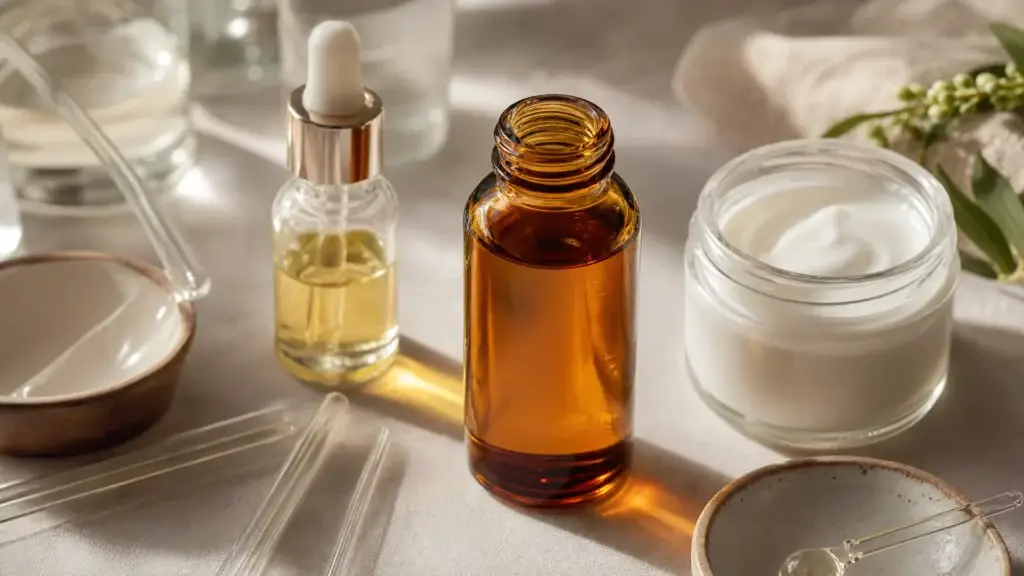
Vitamin E Oil in Skincare: Benefits, Safe Percentages, and DIY Serums
If you’ve ever picked up a bottle labelled “vitamin E oil” and wondered whether it’s the same thing as tocopherol, and whether it actually preserves your products or just benefits your skin, you’re not alone. Vitamin E oil in skincare formulas is one of the most misunderstood ingredients in DIY formulation, and getting it right makes a real difference to both how your products perform and how long they last. This guide covers what vitamin E actually is, how much to use, which formulas it suits best, and how to make a simple serum with it today.
What Vitamin E Oil Actually Is (and Why It Confuses Formulators)
Vitamin E oil vs tocopherol: what’s the difference?
Pure tocopherol is the active form of vitamin E used in cosmetics. It’s a thick, sticky, deep amber liquid, and in that pure state it’s not always easy to work with. “Vitamin E oil” is typically tocopherol (or tocopheryl acetate, its more stable ester form) already diluted into a lighter carrier oil, usually at around 10–30% active concentration.
That’s why labels vary so much. One bottle says “tocopherol,” another says “vitamin E oil,” and a third says “tocopheryl acetate.” They all do broadly similar things, but the concentration differs, so the amount you’d add to a recipe differs too.
Which should you use? For most DIY recipes, pure tocopherol (or a pre-diluted version with a clear % stated) gives you the most control. Tocopheryl acetate is gentler and more stable but needs to be converted to tocopherol on the skin, so its antioxidant action is slightly less immediate.
Natural vs synthetic tocopherol
Natural tocopherol (listed as d-alpha-tocopherol) is derived from plant sources, typically soya or sunflower. Synthetic tocopherol (dl-alpha-tocopherol) is chemically produced and generally considered less bioavailable, though it still provides antioxidant function in a formula. For clean-label DIY products, most formulators prefer the natural d-alpha form.
Vitamin E’s Two Jobs: Active Ingredient and Preservative Aid
This is where the biggest misconception lives, and clearing it up makes the rest of your formulation decisions much simpler.
Vitamin E for anti-ageing: what it does on skin
As a skin active, tocopherol is an antioxidant. It neutralises free radicals at the skin surface, the unstable molecules generated by UV exposure, pollution, and environmental stress that contribute to visible ageing over time. Regular use in a leave-on product supports the skin’s barrier function and can help reduce the appearance of fine lines and uneven tone.
For this skin-active role, you’d use vitamin E at up to 1% in your formula. Below that level it’s still doing antioxidant work in the oil phase, but the skin benefit is primarily at or approaching that 1% mark.
Vitamin E as a preservative: what it actually protects
Here’s the critical distinction: vitamin E acts as an antioxidant preservative for your oils, not as a broad-spectrum preservative for your whole product.
It slows oxidative rancidity in unsaturated carrier oils, the process where oils go “off,” develop a bad smell, and lose their beneficial properties. It does not kill bacteria, mould, or yeast. So it will not protect any formula that contains water from microbial contamination.
Cosmetic chemists consistently distinguish these two roles: 0.1–0.5% tocopherol protects the oil phase from going rancid, while up to 1% is used when the skin-active benefit is the goal. Both functions are real, they just operate at different levels and protect different things.
If your formula contains water, you still need a proper broad-spectrum antimicrobial preservative. Read our guide to natural preservatives for homemade cosmetics for the full picture on what to use there.
Safe Vitamin E Oil Percentages in Recipes
General usage rates by product type
The numbers here are simple and easy to remember:
- 0.1–0.5%, antioxidant protection for the oil phase; extends the shelf life of your carrier oils and prevents rancidity
- Up to 1%, when the skin-active antioxidant benefit is the primary goal (a vitamin E serum or anti-ageing facial oil, for example)
If you’re working with a pre-diluted vitamin E oil rather than pure tocopherol, check the stated active percentage on the label and adjust your quantities so the active tocopherol in your final formula lands in those ranges.
Why more isn’t better
Adding more than 1% tocopherol to a formula doesn’t deliver more benefit, and it causes problems. At higher levels the formula can feel heavy and greasy on the skin, and some users with sensitive skin report irritation at elevated concentrations.
The effective range is well-established in cosmetic formulation. Stay within 0.1–1% and you get all the benefit without the downsides.
How Vitamin E Affects Shelf Life
Tocopherol’s most practical job in an anhydrous (water-free) formula is slowing rancidity. This matters most with carrier oils with shorter shelf lives, specifically those high in polyunsaturated fatty acids (PUFAs).
Rosehip seed oil, hemp seed oil, and sea buckthorn are among the most nutrient-rich carrier oils available, but their high PUFA content means they oxidise relatively quickly without protection. Adding tocopherol at 0.1–0.5% to these oils is standard industry practice to extend their usable life. A rosehip facial oil without any antioxidant protection may go rancid within a few months of opening; with tocopherol added, that window extends meaningfully.
Saturated and more stable oils like coconut, castor, or fractionated coconut oil don’t benefit as dramatically, but there’s no harm in including vitamin E with them, especially if they’re blended with more vulnerable oils.
One reminder: this shelf life benefit applies only to the oil phase. If your formula contains water, a lotion, cream, or gel, tocopherol does not protect it from microbial growth. That still requires a broad-spectrum preservative.
Where Vitamin E Oil Truly Shines: Best Formulas to Use It In
DIY vitamin E serum and facial oils
Anhydrous facial serums and facial oils are the ideal home for vitamin E. They’re made entirely from oil-phase ingredients, they stay on the skin (maximising the active benefit), and they often feature the high-PUFA carrier oils that benefit most from antioxidant protection.
A DIY vitamin E serum built around rosehip oil gets a double benefit: the tocopherol protects the rosehip from going rancid, and it delivers antioxidant activity to the skin on every application.
These formulas are also beginner-friendly because water-free products don’t require a separate antimicrobial preservative, fewer variables to manage if you’re new to formulation.
Balms, butters, and anhydrous products
Lip balms, whipped body butters, and solid skin balms are all excellent candidates. These products typically combine waxes, butters, and oils, all anhydrous, and tocopherol fits naturally into the oil phase at 0.1–1%.
Whipped shea or mango butter formulas that include rosehip or sea buckthorn particularly benefit from tocopherol to protect those vulnerable oils. A lip balm with vitamin E is also a practical anti-ageing product in its own right, supporting the delicate skin on the lips.
Vitamin E is less impactful in rinse-off products like cleansers or shampoos, it simply doesn’t stay on the skin long enough to deliver meaningful active benefit, though it still offers minor oil-phase protection during storage.
If you want to extend your vitamin E formulation skills into a full face cream, our guide on how to make a natural face cream at home walks you through the emulsion process, just remember that a water phase means you’ll need a proper preservative alongside your tocopherol.
Vitamin E Oil in Skincare Formulas
Simple DIY Vitamin E Facial Serum to Try
This is a beginner-friendly anhydrous facial serum, no emulsification, no preservative required, and genuinely effective. It works well for dry, mature, or sensitised skin types.
DIY Vitamin E Facial Serum
Yield: ~30ml | Difficulty: Beginner | Shelf life: ~6–9 months (stored away from heat and light)
| Ingredient | % | Approx. for 30ml |
|---|---|---|
| Rosehip seed oil | 50% | 15ml |
| Jojoba oil | 48% | 14.4ml |
| Pure tocopherol (vitamin E) | 1% | 0.3ml (~6 drops) |
| Lavender or frankincense essential oil | 1% | 0.3ml (~6 drops) |
Method:
- Measure your carrier oils into a clean, sterilised dropper bottle or glass pipette bottle.
- Add the tocopherol and essential oil (if using).
- Cap and gently roll the bottle between your hands to combine, no heat needed.
- Label with the date made.
To use: Apply 3–4 drops to clean skin morning or evening, pressing gently into the skin. A little goes a long way with rosehip.
Because this formula contains no water, it doesn’t need a broad-spectrum antimicrobial preservative, the tocopherol protects the rosehip oil from oxidation, and keeping it water-free removes the microbial risk entirely. Store in a cool, dark place to get the best shelf life from it.
DIY Naturally stocks Natural Vitamin E oil alongside the full range of carrier oils you need, rosehip, jojoba, hemp seed, and more, so you can source everything for this serum in a single order. Browse the range and start formulating today.
Disclaimer: All recipes and formulas are shared in good faith. DIY Naturally is not liable for any adverse reactions. Always perform a patch test before use, and substitute ingredients if you have known allergies. Use at your own discretion.