Betaine in Skincare, Humectant Benefits
Betaine in skincare is one of those ingredients that quietly does a lot of heavy lifting. It hydrates, it soothes, it helps your skin cope with environmental stress, and it comes from one of the most familiar plants on earth. If you’re a DIY formulator looking for a gentle, plant-derived humectant that plays nicely with just about everything in your water phase, betaine deserves a spot in your ingredient cupboard.
What Is Betaine? A Simple Introduction for DIY Formulators
Betaine is a naturally occurring compound, technically a trimethyl glycine, found in plants, animals, and microorganisms. In cosmetics, it works primarily as a humectant and skin-conditioning agent. It draws moisture to the skin, helps maintain a smooth texture in your finished formula, and supports the skin’s own protective mechanisms.
From Sugar Beet to Skincare: Where Betaine Comes From
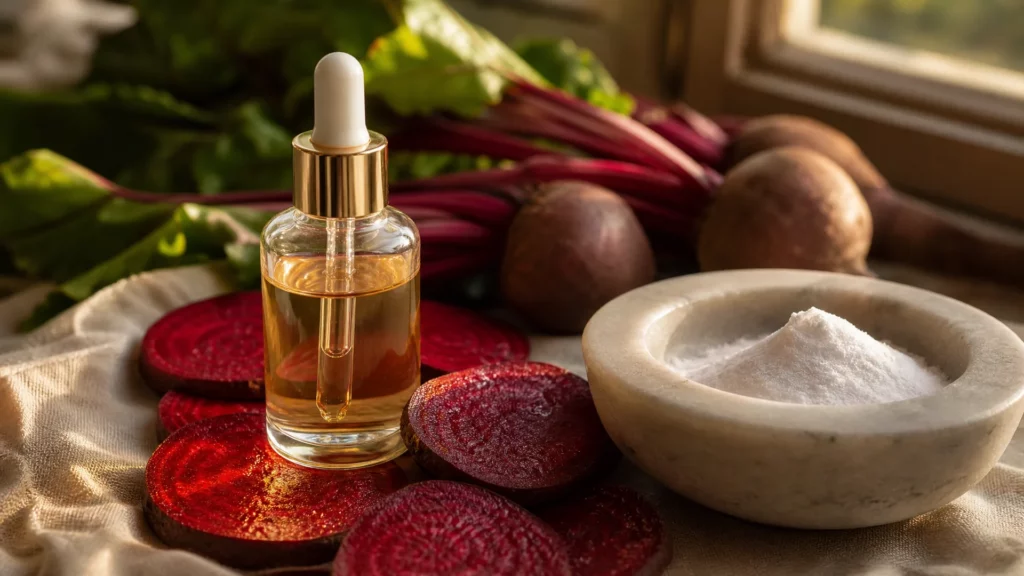
Betaine is extracted as a natural by-product of sugar beet (Beta vulgaris) processing, the same crop grown commercially for table sugar. During sugar refinement, betaine is separated from the molasses fraction and purified for various uses, including cosmetics. That makes it a genuinely renewable, plant-derived active rather than a synthetic lab compound.
Sugar beet is particularly rich in betaine because the plant uses it as a compatible solute, a molecule that helps its cells cope with drought, salt stress, and temperature swings. That same biological function is what makes betaine so useful in skincare, as we’ll explore next.
How Betaine in Skincare Works
Betaine’s value in a formula comes down to two core actions: humectancy and osmoprotection. Understanding both helps you use it more intentionally.
Humectancy and Moisture Retention
Like glycerin and hyaluronic acid, betaine is a humectant, it attracts water molecules and holds them in the upper layers of the skin. This keeps skin feeling soft and plump rather than dry and tight.
Where betaine has an edge over glycerin is in skin feel. Glycerin is effective but can leave a slightly tacky finish, especially at higher concentrations. Betaine tends to feel lighter and less sticky, which makes it easier to achieve a comfortable, non-greasy texture in serums, lotions, and creams. It also contributes a subtle skin-smoothing effect that improves product spreadability.
Skin-Soothing and Osmoprotective Properties
Betaine’s osmoprotective action is what sets it apart from most other humectants. As an osmoprotectant, it helps cells maintain their internal balance when exposed to external stressors, UV radiation, pollution, cold wind, low humidity.
The mechanism is the same one sugar beet uses to survive drought: betaine stabilises proteins and cell membranes under osmotic stress. In a skincare context, this translates to a calming, barrier-supportive effect that’s particularly valuable for sensitive, reactive, or environmentally stressed skin. For formulators in South Africa, where dry conditions, high UV intensity, and wide seasonal temperature swings are common, that osmoprotective function makes betaine especially relevant in barrier-supportive formulations.
Betaine (cosmetic grade): What Makes This Special?
Our Betaine is a cosmetic-grade betaine produced to a high standard of purity for use in personal care products. It’s water-soluble, odourless, and comes as a clear, easy-to-handle liquid, no heating, no dissolving, no extra steps.
Because it’s water-soluble, you add it directly to the water phase of your emulsion or formula. It’s compatible with face creams, cleansers, shampoos, toners, serums, and any other water-containing product, without affecting emulsion stability. That versatility makes it a reliable go-to for formulators who work across multiple product types.
The cosmetic-grade designation matters. Raw or food-grade betaine isn’t formulated for skin application. DIY Naturally’s Cosmetic Grade Betaine is produced specifically for cosmetic use, with the purity and consistency that professional and hobbyist formulators need. Whether you’re making your first moisturiser or producing small batches for market, it’s the form of betaine you want to be working with.
How to Use Betaine in Your DIY Formulations
Betaine is genuinely beginner-friendly. It’s stable, water-soluble, and requires no special handling. Here’s what you need to know to get started.
Usage Rates and Which Products It Suits
Betaine is typically used at 1% to 5% of total formula weight, depending on the product type and the level of hydration you’re targeting. At 1–2%, it adds a conditioning boost without dominating the formula. At up to 5%, it becomes a meaningful active that noticeably improves skin feel and moisture retention.
It suits a wide range of product types, including:
- Hydrating serums, where its light, non-sticky feel is a real advantage
- Face creams and moisturisers, as a water-phase humectant alongside heavier emollients
- Cleansers, where it helps counteract the drying effect of surfactants
- Shampoos and hair conditioners, betaine is widely used in hair care for its conditioning and scalp-soothing properties
- Toners and essences, simple water-phase formulas where it adds hydration without complexity
For a practical introduction to building formulas where betaine can shine, the beginners guide to skincare formulation is a good place to start before you dive into your first batch.
Pairing Betaine with Other Actives
Betaine is highly compatible and plays well with most water-phase actives. Some particularly effective pairings:
- Hyaluronic acid, the classic combination. Hyaluronic acid pulls moisture deep into the skin; betaine helps retain it at the surface and adds smoothness. Together they create a layered hydration effect.
- Panthenol (pro-vitamin B5), both are skin-soothing and conditioning. They reinforce each other’s barrier-supportive benefits, making this pair a go-to for sensitive skin formulas.
- Aloe vera extract, aloe brings its own soothing, anti-inflammatory properties, and betaine complements it well in calming, hydrating serums and after-sun products.
- Niacinamide, betaine’s mild profile won’t interfere with niacinamide’s brightening action, and both contribute to a strengthened skin barrier.
Formulators commonly use betaine alongside hyaluronic acid and panthenol in lightweight hydrating serums, where its mild, non-sticky skin feel helps balance the texture that heavier humectants can create. If you’re working on a face cream and want to explore the full formulation, the guide on how to make a natural face cream at home walks through the process step by step.
You can also consider pairing it with actives like Vitamin E oil in the oil phase for added antioxidant and barrier support, or using jojoba oil as a complementary base ingredient for a lightweight, skin-compatible carrier.
Why Natural-Minded Makers Love Betaine
Betaine ticks several boxes that matter to clean-beauty and natural-formulation communities. It’s plant-derived from sugar beet, biodegradable, and has a well-established mild safety profile. It’s gentle enough for sensitive skin formulations, including products intended for reactive, eczema-prone, or rosacea-affected skin.
More formulators are actively replacing synthetic humectants and conditioning agents with naturally sourced alternatives, and betaine is one of the cleaner swaps available. It performs comparably to some synthetic skin-feel additives, without the concerns some consumers associate with petrochemical-derived ingredients. For formulators building ranges positioned around natural alternatives to silicones and other conventional synthetics, betaine fits that brief well.
Its compatibility with a broad range of skin types, including sensitive and compromised skin, means you’re unlikely to encounter formulation or consumer tolerance issues, which matters when you’re developing products for a varied customer base or your own family.
One practical note: any water-containing formula that includes betaine needs adequate preservation. Take the time to research choosing a natural preservative for your formulation before you finalise your recipe.
Is Betaine the same as Cocamidopropyl Betaine or Coco Betaine?
No. Natural betaine is an active ingredient with moisturization and skin barrier strengthening properties, while cocoamidopropyl betaine and coco betaine are both surfactants with foaming and cleansing properties.
Ready to Add Betaine to Your Next Formulation?
Betaine in skincare is one of those rare actives that’s easy to use, genuinely effective, and sits comfortably within a natural-ingredient story. Whether you’re formulating a simple hydrating serum, a soothing face cream, or a gentle shampoo, it earns its place in the water phase.
DIY Naturally stocks Cosmetic Grade Betaine for South African formulators, hobbyists making their first moisturiser and small-batch makers formulating for market can source it alongside complementary actives like panthenol, hyaluronic acid, and aloe vera extract. You don’t need to order from multiple suppliers to build a well-rounded hydration system.
Pick up your Betaine from DIY Naturally and start experimenting. Your skin, and your formulations, will notice the difference.
Disclaimer: All recipes and formulas are shared in good faith. DIY Naturally is not liable for any adverse reactions. Always perform a patch test before use, and substitute ingredients if you have known allergies. Use at your own discretion.