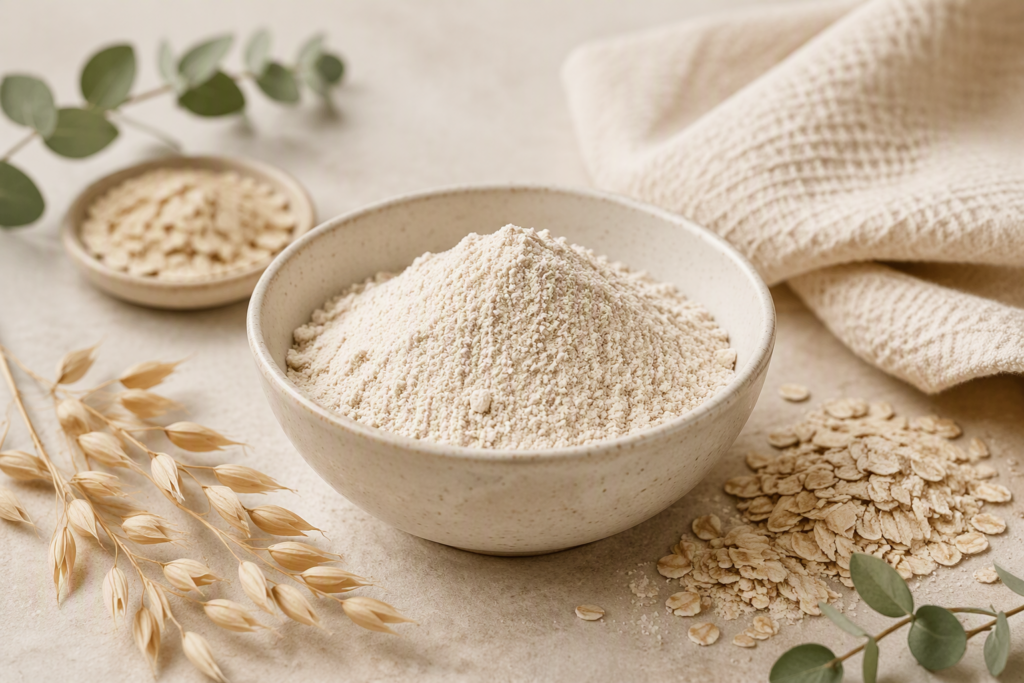
Colloidal Oatmeal: What it is, what it does and How To Use
If you’ve ever wondered why oat baths feel so instantly calming on irritated skin, the answer comes down to one specific form of the ingredient: colloidal oatmeal. This article covers what it is, what it does, and how to use it in personal care products. It’s not breakfast oats ground down in a blender, it’s a precisely milled, cosmetic-active ingredient with a well-documented track record, and it deserves a proper place in your DIY skincare toolkit.
What Is Colloidal Oatmeal?
Colloidal oatmeal is finely milled Avena sativa (oat grain) ground to a particle size small enough to disperse evenly throughout water. When you stir it in, it forms a milky, slightly viscous suspension that coats surfaces, including your skin, rather than sinking to the bottom. That even dispersal is the whole point. It’s what allows the active compounds in the oat to make consistent contact with the skin instead of clumping in patches.
Colloidal oatmeal has been used as a topical skin protectant for over a century. The US FDA formally recognised it as a Category I skin-protectant active ingredient under the OTC monograph for skin protectants (21 CFR Part 347), a status that reflects a long, well-documented history of safe use in sensitive-skin care.
How It Differs from Regular Oats and Oat Flour
Plain oat flour, the kind sold for baking, is coarser and less uniform. In a bath soak or lotion, it feels gritty, disperses poorly, and can clog drains. More importantly, coarser particles don’t release the skin-active compounds as effectively because the milling process is what breaks down the oat structure and makes those compounds available at the skin surface.
Cosmetic-grade colloidal oatmeal is milled to a controlled, fine particle size. The result is smoother, more predictable, and genuinely functional, not just a marketing reframe of grocery-store oats.
What Colloidal Oatmeal Actually Does for Your Skin
The ingredient earns its reputation through four distinct mechanisms, not just one. Each works at a slightly different level, which is why it’s useful across such a wide range of skin concerns.
The Key Actives at Work
Beta-glucan and lipids, barrier repair. Oats are rich in beta-glucan, a polysaccharide that forms a film on the skin surface, and in lipids that help restore the skin’s natural fat layer. Together they support barrier function: the skin’s ability to hold moisture in and keep irritants out.
Humectancy. Colloidal oatmeal draws moisture towards the skin surface, keeping it hydrated between washes. Improved hydration reduces the sensation of tightness and flaking.
Avenanthramides, anti-inflammatory action. These are the polyphenolic compounds unique to oats, and cosmetic dermatologists consistently identify them as the primary driver of oat’s anti-itch and anti-redness activity. Avenanthramides inhibit certain inflammatory pathways in the skin, making colloidal oatmeal far more than a simple moisturiser.
Saponins, gentle cleansing. Oats contain naturally occurring saponins, which have mild surfactant properties. They remove dirt and excess oil without stripping the skin barrier, which is why colloidal oatmeal works so well in gentle cleansers and wash-off masks.
Why It Suits Sensitive and Reactive Skin
Oat-based bath soaks have long been a go-to recommendation for childhood eczema. The colloidal form disperses in warm water to coat and calm inflamed skin, rather than sinking to the bottom of the tub the way coarser oat flour does. The combination of anti-inflammatory avenanthramides, barrier-repairing lipids, and humectant action addresses several aspects of sensitive or reactive skin at once, you’re not choosing between soothing and moisturising. You get both.
It’s also well tolerated by most skin types, including eczema-prone, dry, post-procedure, and allergy-sensitive skin. It’s one of the few cosmetic actives with the clinical and regulatory recognition to back up those claims.
Choosing and Sourcing Colloidal Oatmeal for DIY Formulation
The key distinction when buying is cosmetic-grade versus food-grade. Food-grade oat powder is milled for texture in recipes, not for skin performance. Cosmetic-grade colloidal oatmeal is milled to a controlled, fine particle size specifically for topical use, it disperses more cleanly, performs more consistently, and gives you formulas that look and feel professional rather than gritty.
When evaluating a supplier, look for:
- Particle fineness stated in the product spec. True colloidal oatmeal should have a very fine, uniform texture, almost silky between your fingers.
- INCI name: Avena Sativa Kernel Flour or Avena Sativa (Oat) Kernel Flour, this confirms you’re working with the right material.
- No added fillers or starches in the ingredient listing.
At DIY Naturally we carry cosmetic-grade colloidal oatmeal alongside the emulsifiers, carrier oils, and butters you’ll need to build a complete soothing skincare formula, everything in one place for South African makers.
Sourcing properly from the start saves you headaches. A coarse or mixed powder can block emulsion systems, feel rough on skin, and make it genuinely difficult to know whether your formula is working as intended.
How to Use Colloidal Oatmeal in DIY Skincare Recipes
Usage rates differ significantly between wash-off and leave-on products, and dispersion technique matters in both cases.
Rinse-Off Products: Baths, Cleansers, and Masks
In rinse-off applications, contact time is short, so you can use higher concentrations without the risk of white cast or tackiness. Typical usage rates for rinse-off products:
- Bath soaks: 5–10% of the total blend. Add the colloidal oatmeal directly to warm (not boiling) water and stir well before getting in.
- Cleansers and wash-off masks: 3–8%, dispersed into the water phase or mixed into a clay base.
For bath soaks, blend the powder with a carrier such as fine sea salt, powdered milk, or a small amount of a dispersing bath oil before adding to water, this helps it incorporate evenly rather than clumping on the surface.
Leave-On Products: Lotions, Creams, and Balms
Leave-on formulas call for a lighter hand. In leave-on emulsions, cosmetic formulators typically work with colloidal oatmeal at around 1–3% of the total formula weight. Above that, you risk a noticeable white cast and a heavier, stickier skin feel.
In emulsions (lotions and creams): Add colloidal oatmeal to the water phase of your formula before combining with the oil phase. It disperses readily in warm water and integrates cleanly through the emulsification process. For guidance on making a natural face cream at home, that article walks through a complete emulsion build where actives like this slot into the water phase naturally.
In anhydrous balms: Mix the powder into your warmed oil or butter base. It won’t dissolve, it will suspend, so stir continuously as the balm cools to keep it evenly distributed.
When choosing the right emulsifier for creams and lotions, gentle, skin-compatible emulsifiers are a good match for colloidal oatmeal because they don’t counteract the soothing profile of the formula.
If you’re interested in improving skin feel in your leave-on products without synthetics, natural alternatives to silicone for skin feel covers ingredients that pair well alongside colloidal oatmeal for a smooth, non-greasy finish.
Colloidal Oatmeal Pairing Guide: Ingredients That Work Well Together
Colloidal oatmeal pairs well with a wide range of natural ingredients. These combinations amplify its benefits without competing with its mechanism.
Humectants: Glycerin is the obvious starting point, it reinforces the moisture-drawing effect. Also worth considering is betaine as a humectant partner; betaine is gentle, draws moisture effectively, and has its own mild soothing properties that complement avenanthramide activity well.
Barrier-supporting carrier oils and butters: Shea butter, mango butter, and jojoba oil all reinforce the lipid-replenishing side of colloidal oatmeal’s action. Jojoba is particularly useful in leave-on products because its structure closely mimics the skin’s own sebum.
Gentle emulsifiers: For creamy leave-on products, choose emulsifiers with a clean, non-stripping skin feel. Avoid high-surfactant emulsifier blends in the same formula, they work against the barrier-repair goal.
What to avoid alongside it: High concentrations of alcohol, strong acids, or harsh surfactants will undermine the soothing benefit. Colloidal oatmeal works best in gentle, skin-compatible formulation environments.
Beginner Tips for Getting the Best Results
If you’re new to formulating with colloidal oatmeal, or to DIY skincare in general, our beginner’s guide to skincare formulation gives useful context for the steps below.
Store the powder away from moisture. Colloidal oatmeal is hygroscopic, it absorbs water from the air. Keep it sealed in a cool, dry place. Clumped powder can affect dispersion and introduce microbial risk.
Patch-test every finished product. Even gentle, well-tolerated actives can occasionally cause reactions in individual users. Apply a small amount to the inner arm and wait 24 hours before full use, especially important for eczema-prone or sensitised skin.
Mind your pH in leave-on emulsions. Colloidal oatmeal is most stable and effective in a pH range of around 5–7. Most well-formulated leave-on skin products sit comfortably in this range, but check with a pH strip after formulating.
Preserve any water-containing formula. This is non-negotiable. Any product that contains water, including emulsions, water-dispersed bath soaks in a bottle, or gel-based masks, creates an environment where bacteria and mould can grow. Preserving any water-containing formula properly protects both your product and the person using it.
Weigh, don’t scoop. Colloidal oatmeal is light and airy. A kitchen scale gives you accurate percentages; volume measures vary too much with powders.
Disperse before adding to your batch. Pre-mixing the colloidal oatmeal with a small amount of warm water or glycerin before adding it to the main water phase prevents dry clumps from making it through to the finished product.
Colloidal oatmeal is one of the most beginner-friendly cosmetic actives available, forgiving, effective across a wide range of applications, and backed by genuine science. Start with a cosmetic-grade powder and a simple formula (a bath soak or a basic lotion) and you’ll see quickly what it can do.