Borax: What It Is, Where It Comes From, and How to Use It
What Is Borax? Uses, Benefits, Safety, and Its Role in DIY Formulation
Borax turns up in everything from vintage laundry tins to modern DIY forums, but many people are still unsure what it actually is, where it comes from, how it works, and whether it belongs in homemade skincare and cosmetic formulations.
If you’ve ever wondered what borax is used for, how safe it is, and whether it has a place in your DIY toolkit, this guide will walk you through the facts in plain English.
What Exactly Is Borax?
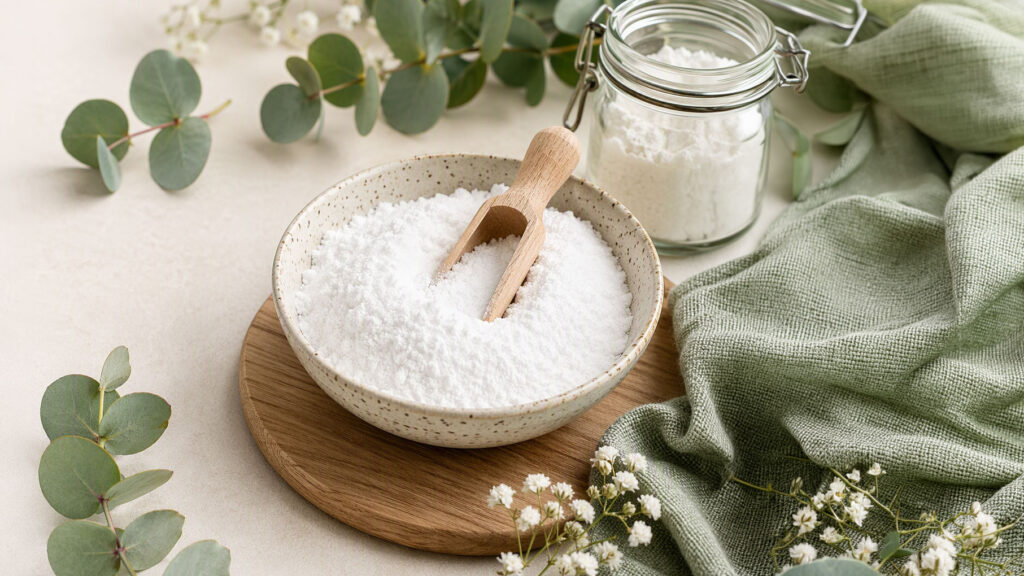
Borax is a naturally occurring mineral compound made primarily of sodium, boron, oxygen, and water molecules. Its chemical name is sodium tetraborate decahydrate, and it appears as a white, crystalline powder that dissolves readily in water.
When dissolved, borax creates a mildly alkaline solution, which is one of the reasons it has become such a popular ingredient in household cleaning products and laundry boosters.
The Science Behind Borax (Without the Chemistry Degree)
Borax belongs to a family of compounds known as borates. These minerals form naturally when boron-rich water evaporates over long periods in arid environments, leaving behind concentrated mineral deposits.
One important distinction worth noting: borax and boric acid are not the same thing. Although they are related compounds, they behave differently and serve different purposes. Boric acid is derived from borate minerals and is often used in specialised pest-control products, while borax is more commonly associated with cleaning, laundry, and certain industrial applications.
Because they work differently, borax and boric acid should not be treated as interchangeable ingredients.
Where Does Borax Come From?
Borax is a naturally mined mineral. It is formed over thousands of years in regions where ancient lakes have evaporated, concentrating boron-rich minerals into large underground deposits.
From Desert Deposits to Household Products
Some of the world’s most important boron and borate mineral deposits are found in:
- California, USA, particularly in the Mojave Desert
- Türkiye (Turkey), which holds a large share of the world’s known boron reserves
After mining, the raw mineral is refined by dissolving it in hot water, removing impurities, and allowing purified crystals to reform. These crystals are then dried, processed into powder, and packaged for industrial and household use.
The result is the familiar white borax powder found in cleaning products, laundry formulations, and certain technical and industrial applications.
Common Uses for Borax Around the Home
Borax has remained popular because a small amount can assist with a variety of everyday household tasks.
Laundry Booster
One of the most common uses for borax is as a laundry additive.
Adding approximately half a cup of borax to a wash load can help soften water, improve detergent performance, and reduce lingering odours. This can be particularly useful in areas with hard water, where minerals may reduce cleaning efficiency.
General Household Cleaning
Borax can be dissolved in warm water to create a simple cleaning solution for:
- Kitchen surfaces
- Sinks
- Tiles
- Bathrooms
- Utility rooms
The mildly alkaline nature of the solution helps loosen grease and everyday dirt without the need for harsh abrasives.
Freshening Drains
Borax is sometimes used to help freshen slow or unpleasant-smelling drains. While it should not be relied upon to clear serious blockages, it may help reduce odours and assist with routine maintenance.
Deodorising Household Areas
Many people use borax solutions to help clean and deodorise:
- Wheelie bins
- Kitchen bins
- Utility sinks
- Outdoor rubbish containers
Its cleaning properties help remove residues that contribute to unpleasant smells.
Borax and Pest Control
Borax has long been used in DIY pest-control applications, particularly for ants and cockroaches.
How It Works
Unlike a repellent that simply drives insects away, borax is most effective when insects ingest it. Because it acts slowly, it is commonly used in bait formulations, allowing insects time to carry contaminated bait back towards the colony.
While this has made borax a popular household pest-control ingredient, it should always be used cautiously and kept away from:
- Children
- Pets
- Food preparation areas
- Animal feeding stations
If pest management is your primary goal, purpose-made commercial products often provide more predictable and safer results.
Borax in DIY Skincare and Cosmetic Formulation
For DIY formulators, borax is most often encountered in discussions around traditional cold creams and historical cosmetic recipes.
The Traditional Beeswax and Borax Combination
Before modern emulsifiers became widely available, formulators often relied on a combination of beeswax, borax, oil, and water to create simple cream formulations.
In these traditional systems, borax helps beeswax form a basic emulsifying structure that temporarily holds oil and water together.
This technique has been used for well over a century and appears in many historical cosmetic references.
Why Most Modern Formulators Choose Something Else
Although the borax-beeswax system is an interesting piece of cosmetic history, it comes with several significant limitations:
- Stability can be inconsistent.
- Texture is difficult to control.
- Results may vary from batch to batch.
- The final pH may not be ideal for every skin type.
- Modern preservation systems can be more challenging to balance.
For these reasons, most cosmetic formulators now use dedicated emulsifying ingredients designed specifically for stable creams and lotions.
If you’re creating modern skincare products, especially leave-on products such as moisturisers, body creams, or facial lotions, a purpose-designed emulsifier will generally provide:
- Better long-term stability
- Improved skin feel
- More predictable results
- Easier formulation and troubleshooting
If you’re new to formulation, our guide to https://diynaturally.co.za/beginners-guide-skincare-formulation/ provides a solid foundation.
For cream making, you can also explore our range of https://diynaturally.co.za/product-category/ingredients/emulsifiers/ and learn more about choosing an https://diynaturally.co.za/emulsifier-natural-creams-olive-m1000-lotion-mulse-65-wax-bp/.
Once your product is emulsified, remember that preservation is equally important. Our guide to https://diynaturally.co.za/natural-preservatives-homemade-cosmetics/ explains what you need to know.
A practical next step is our tutorial on https://diynaturally.co.za/how-to-make-natural-face-cream-at-home/, which uses modern cosmetic ingredients designed for reliable results.
Is Borax Safe?
Borax is useful, but it should still be treated as a household chemical rather than a harmless pantry ingredient.
Like many cleaning ingredients, it requires sensible handling and storage.
Basic Safety Guidelines
- Keep it out of reach of children and pets. Borax can be harmful if swallowed.
- Avoid inhaling the powder. Fine dust may irritate the nose, throat, and respiratory tract.
- Wear gloves if handling it regularly. Repeated contact can cause dryness or irritation in some individuals.
- Avoid contact with the eyes. If exposure occurs, rinse thoroughly with water.
- Store securely. Keep containers tightly sealed and clearly labelled.
What About Food Use?
Borax should not be used in home food preparation.
Regulations vary around the world, but food-related uses are highly restricted. For DIY makers and household users, the safest rule is simple: borax belongs in cleaning and technical applications, not in food.
Is Borax Suitable for Leave-On Cosmetics?
Borax has historical use in traditional cold creams, but most modern formulators no longer rely on it as their primary emulsification system.
For leave-on skincare products, dedicated cosmetic emulsifiers generally offer superior performance, greater consistency, and a more predictable formulation process.
Borax vs Other Popular DIY Ingredients
Borax is often compared with other commonly used DIY and household ingredients.
Bicarbonate of Soda (Baking Soda)
Baking soda is mildly alkaline and useful for:
- Deodorising
- Gentle cleaning
- Household freshening
It is generally milder than borax but may not be as effective in laundry applications.
Washing Soda (Sodium Carbonate)
Washing soda is more alkaline than borax and is commonly used for:
- Heavy-duty laundry cleaning
- Degreasing
- Tackling stubborn stains
Because it is more aggressive, protective gloves are generally recommended when handling it.
Kaolin Clay
Unlike borax, kaolin clay is primarily used in skincare applications.
Popular for face masks and natural beauty products, kaolin clay helps absorb excess oil while remaining gentle on the skin.
If you’re interested in mineral-based skincare ingredients, you may enjoy our guide to https://diynaturally.co.za/diy-kaolin-face-mask-recipe-clay-types/.
Final Thoughts
Borax is one of those ingredients that sits at the intersection of traditional household care and DIY making. It has a long history of use in laundry, cleaning, and even early cosmetic formulations, and it remains a useful ingredient when handled appropriately.
For household cleaning, borax can be a practical addition to your toolkit. For skincare formulation, however, it is best viewed as an interesting piece of cosmetic history rather than a first-choice modern emulsifier.
Understanding what borax does—and what it does not do—helps you make better decisions whether you’re cleaning your home, exploring DIY projects, or formulating your next cosmetic product.
For most modern skincare makers, borax is something worth understanding, even if it isn’t something you’ll use in every formula.